AI-Generated Video Ads on Meta in 2026: Labels, Policy, Results
AI generated ads on Meta in 2026: how AI info labels work, when to disclose, the policy traps behind rejections, and what performs on Facebook and Instagram.

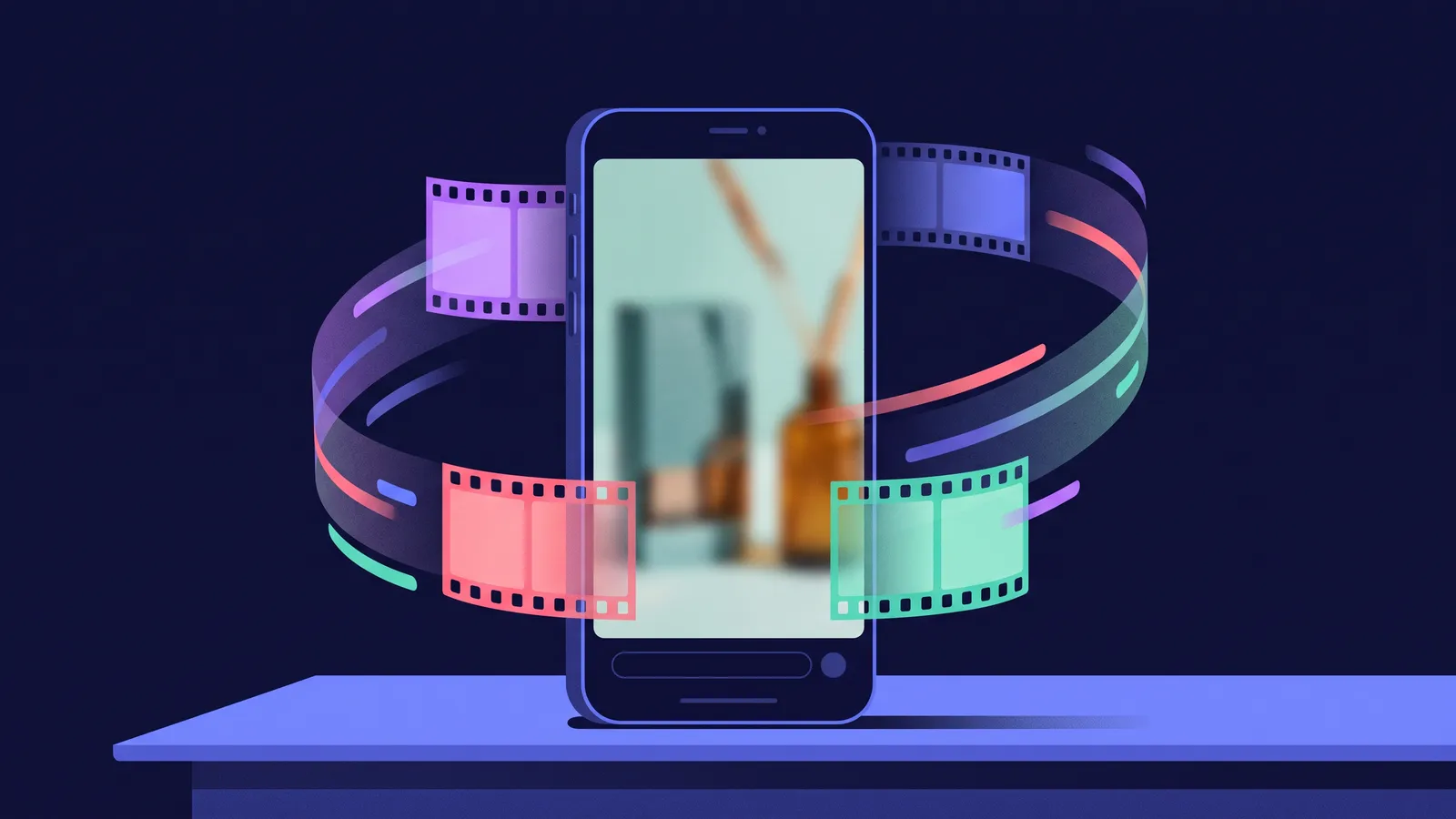
AI generated ads on Meta are no longer an experiment. Meta itself said the combined revenue run-rate of its video generation tools hit $10 billion in Q4 2025, so a growing share of the Reels and Stories ads you scroll past were built, at least partly, with AI. That raises three practical questions for any brand or e-commerce store: when does Meta label AI creative, which policy rules do AI videos trip over, and what actually performs. This guide answers all three from the advertiser’s side of the screen.
A short note on where I’m coming from. For 7+ years I’ve worked with Meta advertisers: first advising 150–280 businesses per quarter on campaigns, Pixel, Conversions API and catalog setups, then leading two teams of up to 27 Meta Marketing Pros serving ~4,500 advertiser accounts. I also ran Meta ads for years for two Shopify brands of my own, and today I produce AI video, from ad creative to cinematic shorts. So I write this from both sides: fixing rejected ads and shipping the creative.
How Meta labels AI-generated ads in 2026
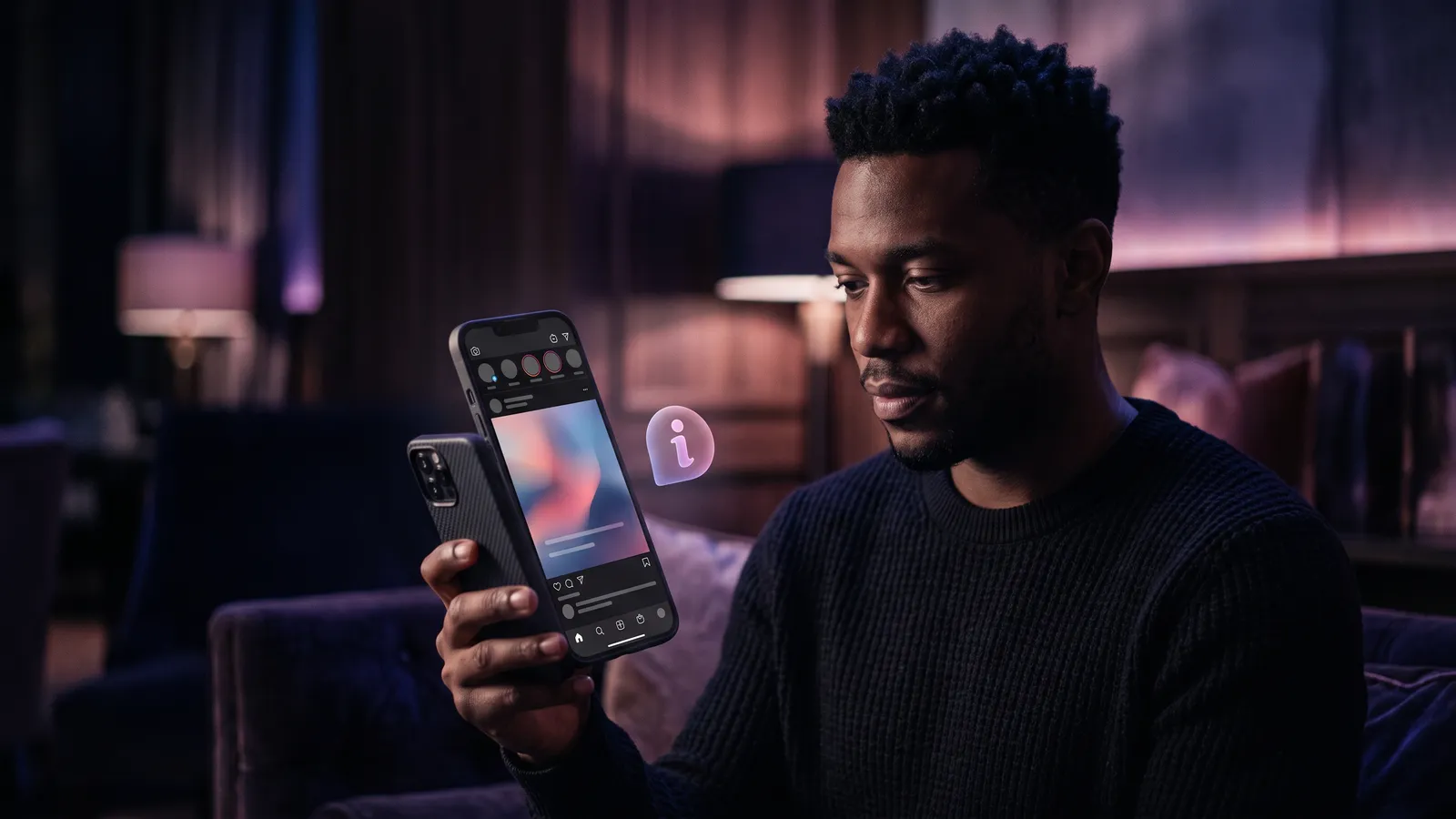
The “AI info” label
Meta’s approach is built on two signals: what you made with Meta’s own tools, and what it can detect from other tools. According to Meta’s GenAI transparency update for ads, which was updated on 1 June 2026:
- Ads created or significantly edited with Meta’s generative AI creative tools get an “AI info” label.
- Meta is automatically detecting ads created or edited with third-party AI tools through industry-standard signals (such as embedded content credentials) and labelling those too.
- The label now sits inside “About this ad”, a destination in the three-dot menu on every ad. Meta notes the experience may vary by region because of legal requirements.
- Under Meta’s original 2025 rules, if Meta’s tools generate a photorealistic human, the label appears next to “Sponsored” rather than only behind the menu. The June 2026 update doesn’t say whether that placement changes with “About this ad”.
- Minor edits with Meta’s tools, without a photorealistic person, do not get a label.
A label is not a penalty. What hurts is the reason a viewer would care about it: a fake-looking person, an implausible product shot, a promise the product can’t keep.
When advertisers must disclose
The firm self-disclosure rule is for ads about social issues, elections or politics. Meta’s 2026 midterms post states that advertisers are required to disclose when they use AI to create or alter these ads in certain cases, and Meta then adds information to the ad and to the Ad Library. The cases Meta has described since the rule began in 2024 are photorealistic images, video or realistic-sounding audio that were digitally created or altered to:
- show a real person saying or doing something they didn’t say or do,
- show a realistic-looking person who doesn’t exist, or a realistic-looking event that didn’t happen,
- alter footage of a real event, or depict a realistic event that isn’t a true recording.
Minor changes that don’t affect the claim, such as cropping, resizing or colour correction, are exempt. Undisclosed ads can be rejected, and repeat failures can bring penalties.
For ordinary product ads I can’t confirm an equivalent tick-box obligation from Meta’s own pages. That doesn’t mean “anything goes”: the rest of the advertising standards still apply, and that is where AI creative gets into trouble. These rules move quickly, so check the current policy in Ads Manager and the Transparency Center before a big launch.
Meta’s own generative AI ad tools
Meta’s tools live mostly under Advantage+ creative in Ads Manager, which generates and enhances variations across single image, video and carousel ads. Features Meta names on its Advantage+ creative page include background generation, image expansion, image animation, video expansion and text generation.
On top of that, Meta has been rolling out more over the last two years:
- Video generation that turns several product images into a multi-scene video with motion, text overlays and a soundtrack (announced as in testing at Cannes Lions 2025).
- Virtual try-on for apparel, shown on virtual models of different body types (expanding tests in 2025).
- At Cannes Lions 2026, Meta announced Brand Memory, which learns a brand’s look and tone from its past ads, plus text generation for the text inside the creative and wider translation and voice-over dubbing support.
Availability varies by account, market and placement, so treat any feature as “check your Ads Manager”, not as a guarantee.
My take: these tools are good for variation. Expanding a 1:1 image into 9:16, testing three backgrounds, animating a still for Reels. They are weaker at the thing that makes a video ad work: a strong idea, a hook, and a product story. That part still needs a person, or a deliberate workflow with stronger video models.
Ad policy pitfalls AI creatives often hit
Most AI ad rejections I see are not about AI. They are classic policy problems that AI makes easier to create by accident, because the model happily writes or renders whatever the prompt implies.
Personal attributes
Meta’s Personal Attributes policy does not allow ads to assert or imply a viewer’s attributes: health, age, religion, financial status, sexual orientation and more. AI scripts love “Struggling with hair loss?” or “Tired of your acne?” style hooks. Rewrite them around the product: “A hair-care routine built for thicker-looking hair” instead of “Your thinning hair”.
Health, before-and-after and body image
I worked with many clinic advertisers (hair transplant, aesthetic and dental) and fixed a lot of rejected health ads. The same three problems came up again and again: personal attributes, before-and-after visuals, and medical claims. Meta’s Health and Wellness standard limits before-and-after imagery (side-by-side weight-loss transformations are not allowed), requires 18+ targeting for weight-loss and cosmetic product or procedure ads, and doesn’t allow ads that imply a negative self-perception of body image. With AI, the danger is obvious: a model can generate a “perfect result” that never happened. Don’t do it. If you show results, use real, documented ones and stay within the current policy.
Misleading claims and invented product features
AI can make your product look bigger, shinier, or able to do things it can’t. That turns into a misleading ad and a refund problem. Meta’s deceptive-practices rules cover exaggerated claims about success or health benefits. Keep claims to what you can prove.
Fake testimonials and people presented as real customers
An AI presenter is fine. An AI person framed as “Sarah from Leeds, verified buyer” is not. If the testimonial isn’t real, don’t write it as one.
Celebrity likeness
Never generate a face or voice that resembles a public figure. Meta uses facial recognition to find celeb-bait ads, and says it compares faces in suspicious ads with the profile pictures of enrolled public figures (Meta’s anti-scam update). A “look-alike” made by AI is still a look-alike.
How to avoid rejections
- Write copy about the product, never about the viewer’s body, health or problems.
- Keep a “claims sheet”: every claim in the ad, and the proof behind it.
- Review every frame, not just the first one. AI artefacts and unintended text show up mid-clip.
- Make sure the landing page matches the ad. A mismatch is a frequent reason for rejections in my experience.
- If an ad is rejected, fix the cause before requesting review. Repeated rejections can affect the ad account.
The creative side: what performs
AI doesn’t change what works on Facebook and Instagram. It changes how fast you can produce and test it.
Hook in the first 1–3 seconds. Open with the product in action or a surprising visual. No logo intros.
9:16 first. Reels and Stories are vertical. Produce vertical, then adapt to 4:5 and 1:1, not the other way round. Keep key elements away from the top and bottom where the interface sits.
Captions for sound-off. Many people watch without sound. Burn in clear captions, or at least make the story readable without audio.
Product accuracy. This is my hard rule: use real product photos as reference, and never let AI invent product features. Colours, logos, packaging and size must match what the customer receives.
Variations for creative testing. One concept, several hooks, two or three lengths. Let the data choose. AI makes this cheap, which is where it pays off most.
Keep the “AI look” out of UGC-style ads. Waxy skin, perfect lighting and dead-eyed presenters scream “fake” in a format whose whole value is authenticity. If you make AI UGC ads, keep them rough, handheld-looking and imperfect, or don’t make them UGC at all.
Honest presenters. A clearly stylised or animated character, or a presenter who doesn’t claim to be a customer, usually works better than a synthetic “real person”.
For the tools themselves, I compared the main models in my companion article on AI video generators for ads in 2026.

Measurement: fix tracking before you judge creatives
The most common mistake I saw across thousands of accounts: people blame the creative when the tracking is broken. Before you decide an AI video “doesn’t work”, check:
- The Meta Pixel and the Conversions API both send the key events (ViewContent, AddToCart, Purchase).
- Browser and server events are deduplicated with matching event names and event IDs (Meta’s deduplication guide).
- Event Match Quality is “Good” or better in Events Manager.
- Purchase values and currency are correct.
If you want a second pair of eyes on this, it’s part of my services.
My workflow for an AI video ad
This is how I build an AI video ad for a brand, step by step.
- Brief and claims first. I start with the offer, the audience and a list of claims the brand can prove. No prompt before that.
- Real references. I collect real product photos from several angles, packaging and any brand guidelines. These are my ground truth.
- Three hooks, one story. I script a 15–25 second story with three alternative openings.
- Generate with my own workflow. I use my own workflow, ViralVidz, which orchestrates models like Google Veo, to generate scenes, then I check each clip against the product photos. Anything that changes the product gets regenerated or replaced with real footage. You can see the approach in The Last Driver of the Virtual City, a 23-second cinematic AI short.
- Edit for the feed. 9:16, captions, sound design, product on screen within the first seconds.
- Policy pass. I read every line and watch every frame against the policy pitfalls above.
- Variations and launch. Hooks × lengths, with tracking verified before launch.
The same craft goes into my non-ad work, like the AI music video “Yüzleşme Vakti” and the animated series Whisker Woods.
Quick checklist
- Product looks exactly like the real one
- No claims you can’t prove
- No copy about the viewer’s personal attributes
- No idealised before-and-after, no public-figure likeness
- No AI person presented as a real customer
- Hook in the first 1–3 seconds, 9:16, captions
- 3+ variations ready for testing
- Disclosure handled if the ad touches social issues, elections or politics
- Pixel + Conversions API deduplicated and verified
If you want AI video ads made this way, get in touch.
FAQ
Does Meta label every AI-generated ad?
No. The “AI info” label goes on ads created or significantly edited with Meta’s own generative AI tools, and on ads Meta detects as made with third-party tools. Minor edits without a photorealistic human aren’t labelled.
Do I have to disclose AI use in a normal product ad?
The explicit self-disclosure requirement covers ads about social issues, elections or politics in certain cases. For regular product ads, the honest-advertising rules still apply. Check the current policy before launching.
Why do AI video ads get rejected on Meta?
Usually for the same reasons as any ad: personal attributes in the copy, idealised before-and-after visuals, exaggerated health or income claims, or a public figure’s likeness. AI just makes these easier to create by accident.
Do AI UGC ads still work?
They can, if they don’t look like AI and don’t pretend to be real customers. An honest AI presenter or an animated product story is a better bet than a synthetic “verified buyer”.
What should I check before judging an AI creative?
Your tracking. Pixel and Conversions API should both fire, be deduplicated, and have good Event Match Quality, or you are comparing creatives on noisy data.